
In today’s crowded digital world, simply creating great content is no longer enough. To stand out, you need a well-defined approach to ensure your content reaches the right person, at the right time, with the right message.
The power of a content marketing funnel is that this approach aligns your content efforts with the natural progression of the buyer’s journey, turning curious visitors into loyal advocates.
This guide will walk you through the core concepts, stages, creation process, and real-world applications of an effective content marketing funnel.
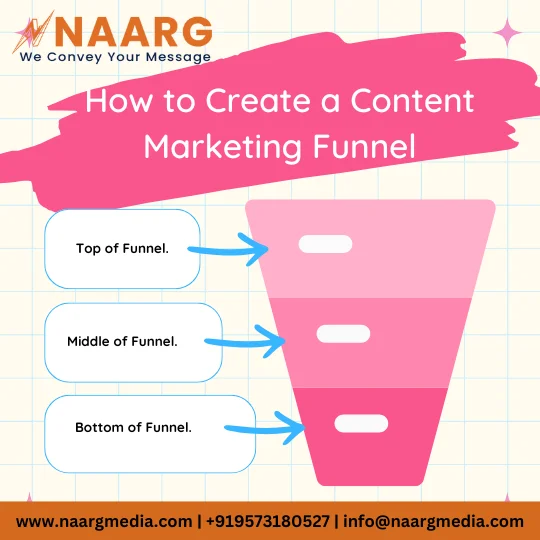
What is a Content Marketing Funnel?
A content marketing funnel is a deliberate, multi-stage system that maps out the potential customer’s path from initial awareness of their problem to the final decision to purchase your solution.
It visually represents the buyer’s journey with strategically introduced targeted content pieces at each step. Unlike traditional, linear sales processes, the funnel acknowledges that modern buyers self-educate online and understand their evolving needs and motivations at each stage.
Let’s explore the three stages of the content marketing funnel.
The Three Stages of the Content Marketing Funnel
The funnel is typically broken down into three primary stages, each representing a distinct shift in the prospect’s mindset and information needs:
1. Top-of-Funnel (TOFU)
Did you know that about 86% of B2B content marketing is still focused on the top-of-the-funnel (brand awareness) portion? In this, the audience experiences a pain point or has a need, but is not aware of potential solutions or your brand specifically.
They are searching for information, education, and answers to general questions. Content here is broad, easily digestible, and focuses purely on providing value and attracting a wide audience through search engines and social media.
2. Middle-of-Funnel (MOFU)
This is the consideration stage. The prospect is now actively researching potential solutions to their pain points. They are aware of different options (including your brand and competitors) and are in evaluation mode.
Content at this stage aims to build trust, demonstrate expertise, and help the user compare and contrast different choices. The focus shifts from general education to demonstrating how specific approaches or products can effectively solve their problems.
3. Bottom-of-Funnel (BOFU)
It is the decision stage where the prospect is ready to make a purchase. They have done their research and need a final, compelling reason to choose your specific product or service over the competitor’s.
Content here is specified, focuses on unique selling propositions, removes final objections, and prompts immediate action, leading to a successful conversion funnel. Now, let’s learn how to create this stack of funnels.
How to Build an Efficient Content Marketing Funnel
Building a funnel is a systematic process that moves from strategy to execution and measurement using the following steps:
1. Define Your Audience and Their Pain Points
Begin by creating detailed buyer personas. Understand their goals, challenges, and the specific questions they ask at each stage of their journey. This research is the foundation for the next steps.
2. Map Content for Each Funnel Stage
Align your content strategy according to your audience’s intent. Make use of blog posts, infographics, and visuals for awareness; white papers and case studies for consideration; and product demos or free trials for decision-making.
3. Establish Clear Conversion Paths (CTAs)
Every piece of content, especially in the MOFU and BOFU stages, needs a clear call to action (CTA). This might be “Subscribe for More Tips” (TOFU), “Download the E-book” (MOFU), or “Start Your Free Trial” (BOFU). The CTA guides the user to the next stage.
4. Create Gated Content for Lead Generation
In the transition from TOFU to MOFU, use gated content (requiring an email address for access), such as e-books or webinars. This captures lead information and allows the transition from an anonymous visitor to a known prospect.
5. Implement Email Nurturing Sequences
Once a lead is captured, use automated email marketing workflows to deliver a timed series of relevant content pieces. This campaign nurtures the lead over time, gradually moving them down the funnel toward a purchase decision.
6. Select the Right Distribution Channels
Promote your content where your audience spends time. Use SEO and social media for awareness content, targeted email for nurturing leads, and paid retargeting ads for decision-stage content to remind prospects of your offers.
7. Set Up Analytics and Tracking
Use tools like Google Analytics to track performance metrics (traffic, conversion rates, time on page, etc.) at every stage of the funnel. This data is important for identifying bottlenecks and optimizing your strategy.
Content Optimization and Funnel Automation
Creating the funnel is only the first step; continuous optimization is key to maximizing return on investment. You can apply this improvement using content optimization and funnel automation that are based on data gathered through analytics.
1. Content optimization
Content optimization fine-tunes the individual content pieces to perform well. This might include updating existing blog posts with fresh data for better SEO performance, A/B testing different headlines or CTA buttons to improve click-through rates, or reformatting a white paper into a more engaging video series.
The goal is to ensure each piece is as effective as possible in engaging the target audience.
2. Funnel automation
Funnel automation on the other hand, looks at the bigger scenario. It involves using technology to streamline and optimize the flow between stages. Are people dropping off after downloading a white paper but not opening the follow-up email?
Is the transition from the consideration stage to the decision stage too abrupt and time-consuming? Funnel automation uses software and tools to automate repetitive marketing tasks. It helps bridge the gap and avoid delays due to slow manual processes.
The effectiveness of this modern approach can be witnessed in the successful real-world examples that we will discuss further.
Real-World Examples of Content Marketing Funnels
Many successful companies leverage variations of the content marketing funnel:
1. HubSpot
A classic example in the B2B space. They use extensive free resources (blog posts, templates, and reports) at the top of the funnel to attract millions of visitors. They convert these visitors into leads via gated e-books and certifications (MOFU).
Finally, they offer free trials and product demos (BOFU) to direct prospects toward purchasing their software.
2. Netflix
Their funnel is heavily centered on content consumption. Awareness is built through massive media campaigns and social buzz around original shows. The consideration phase is a free trial (BOFU content) that allows users to sample the product directly.
Retention content includes personalized recommendations and email updates about new releases to keep subscribers engaged post-purchase.
3. Wix
A widely known website builder platform. Their TOFU content includes blog posts on “how to start a business” or “SEO tips.” Their MOFU is a free account where users start building a basic site.
Their BOFU uses prompts in the free builder and leads to an upgrade to a paid premium plan for advanced features like a custom domain or e-commerce capabilities.
In conclusion, if you take this strategic path of modern marketing and follow the content strategy of these successful marketing experts, it will give your brand big returns on your investments in creating an effective content marketing funnel.
Need a hand translating your marketing content?
Look no further!
We are Naarg, a global language services provider that supports various businesses in reaching a global audience in any language.
Contact us today to learn more about our services.