
Your product is added to the cart of a Tokyo customer. Your Indian support staff responds to their inquiries promptly. In the meantime, your London-created marketing campaign is already making waves in Brazil.
This is not a preview of what lies ahead. It’s the way modern business operates. Business globalization now involves more than just entering new markets; it involves thinking, acting, and interacting across national boundaries from the very beginning.
A global audience that demands relevance, speed, and cultural awareness now shapes how you produce, sell, and communicate, regardless of your brand’s level of experience. However, what does globalization actually mean for local businesses?
Is there more to it than just selling abroad?
In this blog, we’ll break down what is globalization in business and what it actually looks like, why it matters more than ever, and how companies can make the most of it without losing their local edge.
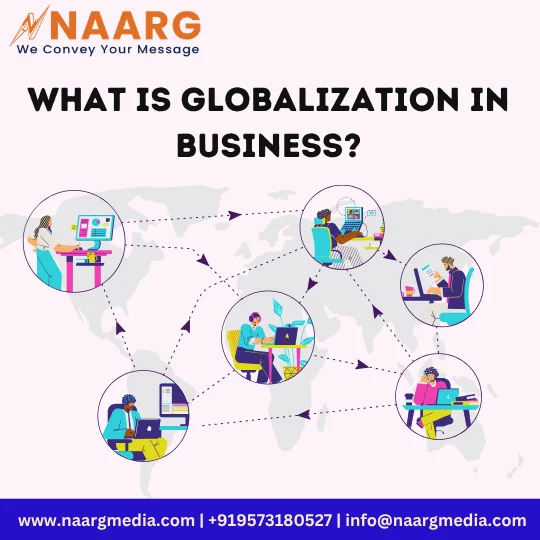
What Is Globalization in Business?
In the context of business, globalization is the process by which organizations grow, function, and establish connections across national boundaries in order to reach clients, find talent, and create markets that are far from their own nation.
Large corporations are no longer the only ones spearheading this change; thanks to digital platforms and seamless communication technologies, even small businesses can reach a worldwide audience.
However, being present in several nations isn’t enough to succeed internationally; you also need to comprehend and adjust to different cultures, languages, and consumer habits.
Localization is crucial for gaining customers’ trust and promoting global expansion, as evidenced by studies showing that 76% of online shoppers prefer to purchase goods with information in their native tongue. What really characterizes modern business globalization is this fusion of local relevance and global reach.
How Globalization in Business Works?
Let’s now examine how business globalization operates.
1. Entering foreign markets
Companies now actively seek out new areas where their goods or services can meet a need rather than just selling locally. This could entail establishing offices abroad, collaborating with regional distributors, or exporting goods. The objective is to diversify revenue sources and reach new clientele.
2. Establishing international supply networks
Businesses source manufacturing, materials, and services from several nations rather than just one. For instance, production may take place in one area, raw materials may originate in another, and distribution may be managed in a different location. This lowers expenses, boosts productivity, and lessens the chance of disruptions in one area.
3. Customizing goods for regional markets
What is effective in one nation might not be in another. Companies frequently alter their goods or services to conform to regional preferences, cultural norms, and consumer expectations. This can involve altering packaging, modifying prices, or even redesigning features.
4. Making use of digital channels
Globalization is now more accessible than ever, thanks to the internet. Businesses can instantly reach audiences around the world through social media, mobile apps, and e-commerce websites. It is no longer necessary for small brands to have a physical presence in every market to sell internationally.
5. Working together internationally
Teams can collaborate from all over the world thanks to globalization. Businesses create remote, diverse teams with a range of viewpoints and specialties. In addition to encouraging innovation, this aids companies in comprehending their markets.
6. Respecting international laws
Each nation has its own laws of employment, trade, taxes, and data privacy. To operate lawfully and avoid fines, businesses must comprehend and abide by these regulations, which frequently call for local knowledge or legal assistance.
7. Localizing communications and marketing
Content translation alone is insufficient. Companies modify their messaging to take into account regional linguistic quirks, cultural norms, and consumer preferences. This strengthens ties with clients in various locations and makes communication more relatable.
Benefits of Globalization in Business
Globalization offers a range of advantages that can significantly impact long-term success.
1. Gaining access to a bigger clientele
A company can reach audiences well beyond its home market thanks to globalization. Businesses can reach millions of potential customers globally, boosting visibility and long-term growth opportunities, rather than depending on a small local customer base.
2. More opportunities for revenue
Businesses can generate a variety of revenue streams by operating in several nations. Strong performance in one area can help sustain overall revenue stability and steady growth if demand slows down in another.
3. Increased profitability and cost effectiveness
Based on cost advantages, businesses can strategically decide where to manufacture goods, source materials, or outsource services. This adaptability increases profit margins and lowers operating costs without sacrificing output quality.
4. Increased availability of worldwide talent
Businesses can hire qualified workers from anywhere in the world thanks to remote work and digital collaboration. This brings in new viewpoints, cultural insights, and specialized knowledge in addition to filling talent gaps.
5. Increased originality and inventiveness
Businesses are forced to adopt new perspectives when they are exposed to diverse markets and cultures. New concepts, better products, and more creative solutions that can be used in different markets are frequently the result of adapting to the diverse needs of customers.
6. Stronger brand recognition
A presence in multiple countries helps build a brand’s credibility and authority. When customers see a business operating globally, it often enhances trust and positions the company as established and reliable.
Real-World Examples of Globalization in Business
These businesses show how globalization works in real life by having a global reach and being relevant in their local markets.
1. Apple Inc.
It designs its products in the US, gets parts from many countries, and mostly makes them in Asia. Because it has customers all over the world and a global supply chain, it is a classic example of how businesses work across borders.
2. McDonald’s
It serves customers in more than 100 countries and changes its menu to fit local tastes. For example, it offers McAloo Tikki in India and teriyaki burgers in Japan. This shows how important localisation is for global success.
3. Amazon
Operates localised websites in different countries, uses region-specific warehouses, and adjusts logistics and delivery systems to meet local demand while still being present around the world.
4. Netflix
It grows around the world by making and promoting content that is specific to certain regions, like Korean dramas and Spanish series, and making them available to people all over the world through subtitles and dubbing.
5. Nike
Sources make things in different countries and sell them all over the world using culturally appropriate ads, often working with local athletes and influencers.
Globalization in business is no longer a choice; it’s a fact that affects how companies grow, compete, and stay relevant. The businesses that do well today are the ones that don’t just grow globally, but do so in a smart way that balances efficiency with cultural understanding and scale with personalization.
As markets become more connected, being able to adapt, localise, and connect with a wide range of people in a meaningful way will be the key to long-term success.
Are you ready to take your business across borders?
It’s time to think about the whole world while acting in your own area. If you want to enter new markets or strengthen your international presence, make sure your strategy is built for real connection, not just reach.
Start making a brand that people all over the world will love, and that will help your business grow for a long time. Contact us today.